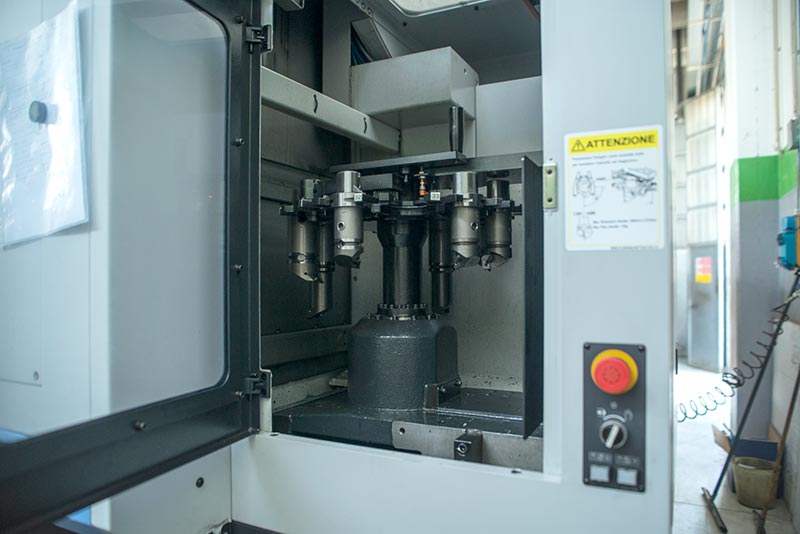
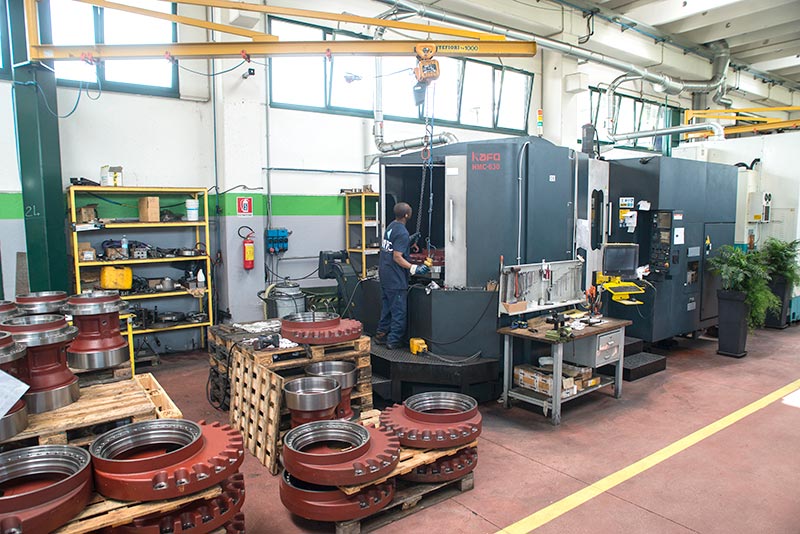
TURNING: is an industrial production process obtained by chip removal, widely used in metalworking. The machine used is the lathe. Turning is defined by a rotary motion of the workpiece and a mostly rectilinear motion of the tool. The cutting edge of the tool penetrates the material of the workpiece, removing the excess part, called stock, and thus forming a chip.
MILLING: This is a cold mechanical process involving the removal of chipsby a tool rotating around its own axis on a workpiece in a forward motion. Unlike turning, the tool's motion is also rotary, rather than linear. To produce the finished piece , it must be inscribed within the starting piece from which the excess metal will be removed.
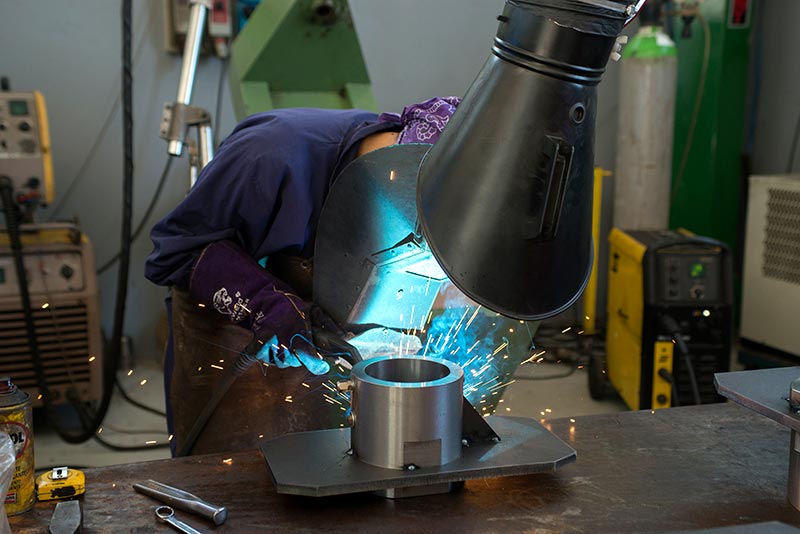
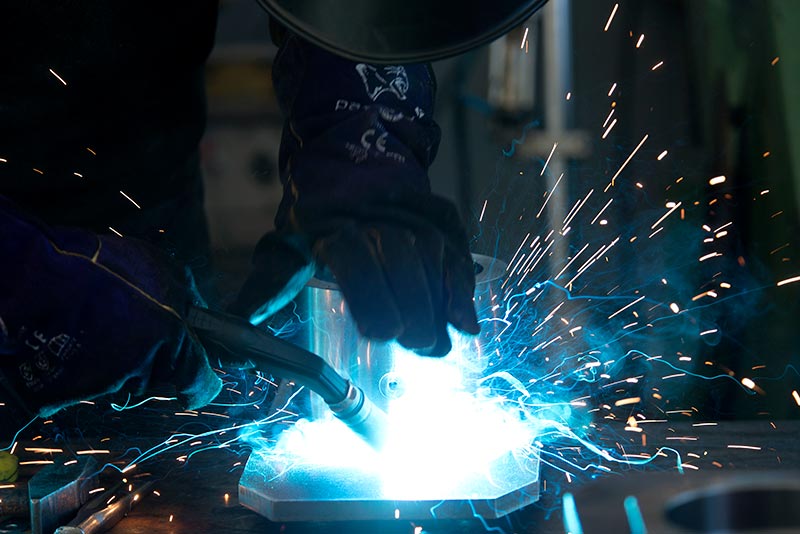
WELDING: is a joining technique that creates the permanent union of two metal pieces with or without the addition of material (FILLER METAL) and under the action of heat. The FILLER METAL is distributed in a molten state between the appropriately prepared edges (caulking) of the pieces to be joined.
The EDGES, or FLAPs, are the surfaces whose entire length is affected by the welding of the pieces; their preparation is carried out by giving them the most suitable geometric shape, depending above all on the thickness to be welded, to facilitate the execution of the weld.
The material of the pieces to be joined is called the BASE MATERIAL.
The MELTING BATH is the portion of metal that is in a liquid state during melting. The WELD BEAD consists of all the metal, both base and filler, solidified by cooling after being melted during welding. The weld bead is the essential element of the welded joint, and its deposition determines the actual welding technique.